
Digital Health Paradox: What We Got Wrong About Older Adults
Turns out seniors are crushing digital health—so why are we still designing like they're not?


|
Welcome to Care & Connection Chronicle!
Today’s issue reveals a surprising truth: your older patients are more digitally engaged than you think—and practices that understand this are building competitive advantages through strategic marketing, integrated operations, and patient-centered innovation.
What’s in this issue:
- 🔍 The digital divide paradox: 58% of seniors struggle with health tech, but 86% want to learn—and data shows they’re MORE engaged than younger patients
- 🚀 How ‘stacked marketing’ creates momentum through coordinated multi-channel campaigns that keep conversations going until patients are ready
- 🎯 Why practices are creating dedicated optimization roles that blend clinical expertise with business operations
- 🧠 Science-based frameworks for understanding cognitive diversity and building higher-performing practice teams
- 💡 Real-world examples of whole-person care and tech-enabled coordination that drive patient loyalty
💡 Quote of the Day
“When site personnel focus on financial management rather than patient care, everyone loses. Integrated systems don’t just improve efficiency—they restore the human element that makes healthcare work.”
— Carolina Carrasco, IQVIA
📰 Latest News
🔗 CVS Study: 58% Of Medicare-Eligible Adults Struggle With Digital Health Tools (5 minute read)
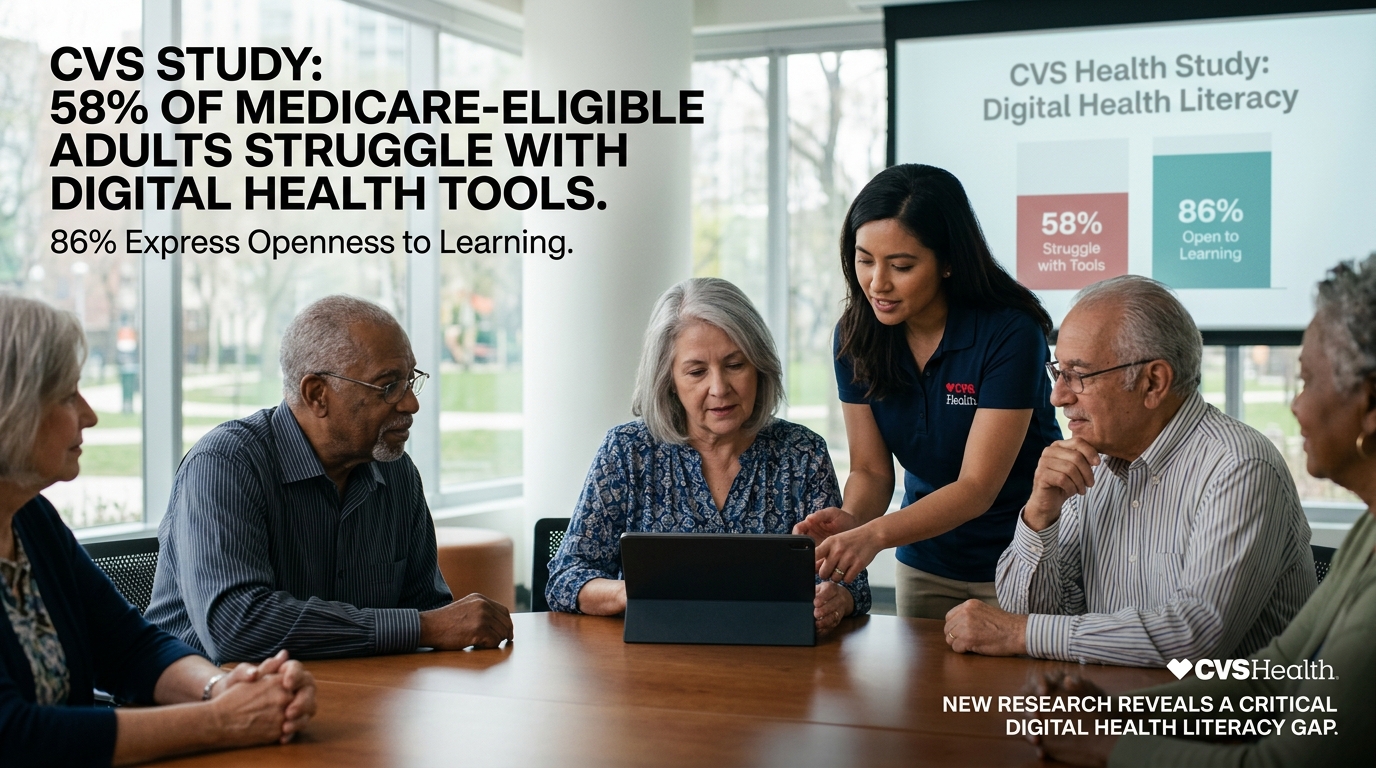
CVS Health’s groundbreaking research reveals a critical tension in healthcare’s digital transformation: while 58% of Medicare-eligible adults struggle with digital health tools, an encouraging 86% express openness to learning with proper support. As telehealth, patient portals, and AI-powered tools become standard, older Americans face real barriers including confusing interfaces and privacy concerns. With all baby boomers now 65 or older—representing one in five Americans by 2030—this isn’t a niche problem.
Key Points:
- Nearly 6 in 10 Medicare-eligible adults report difficulty navigating digital health platforms, yet 86% are willing to learn with appropriate support
- Baby boomers will represent 20% of the U.S. population by 2030, making digital literacy a strategic imperative for patient access
- CVS is investing $20 billion in technology infrastructure while expanding in-person digital navigation services at pharmacies, simplified app interfaces, and community training partnerships
Why it matters: This research identifies a massive opportunity practices are missing. The digital divide isn’t about older patients being incapable—it’s about practices failing to provide the bridge. Those who invest in patient education, simplified interfaces, and hybrid digital-personal support models will capture and retain a demographic that’s both growing and underserved. The 86% willingness to learn represents untapped potential for practices that meet patients where they are.
🔗 Older Adults Are More Digitally Engaged in Trials Than We Think (8 minute read)
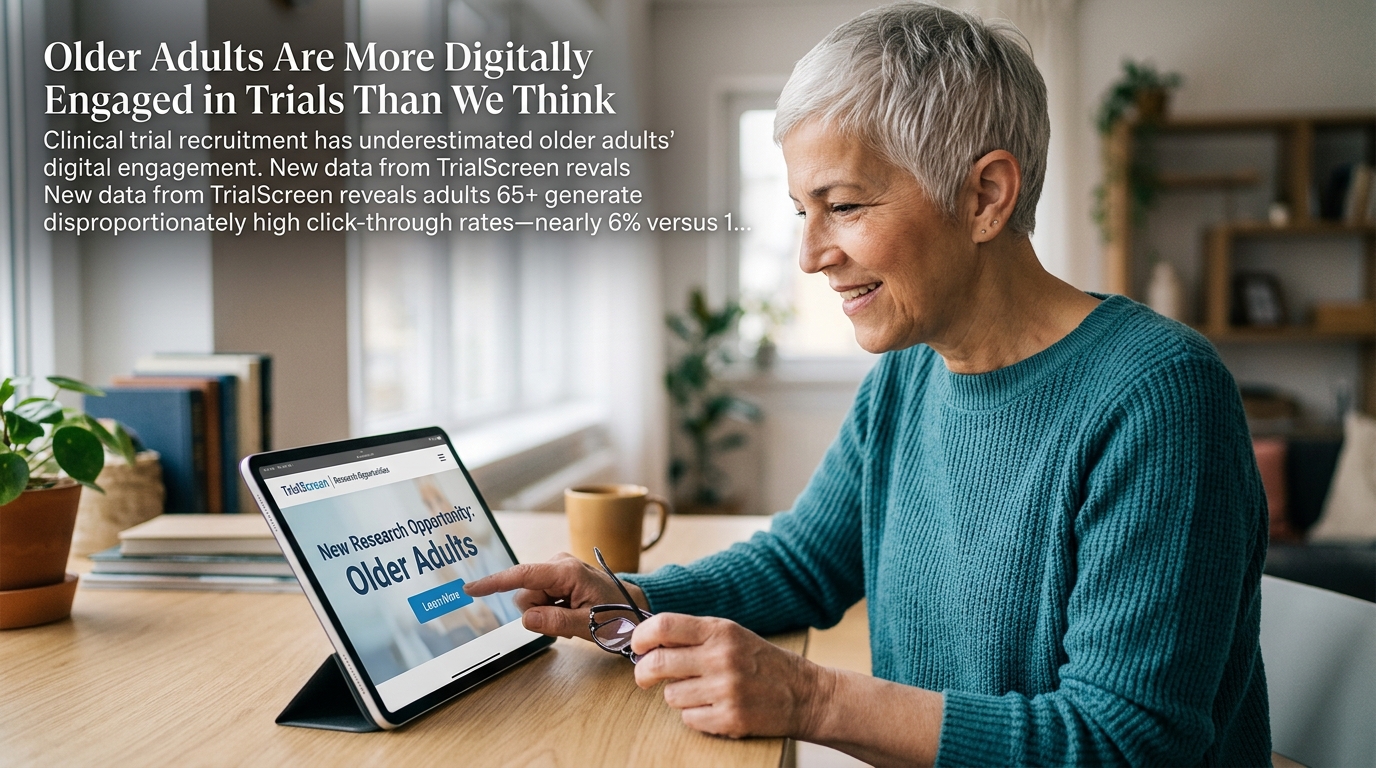
Clinical trial recruitment has been operating on a flawed assumption—and new data from TrialScreen completely upends conventional wisdom about older adults and digital engagement. Adults 65+ generate click-through rates of nearly 6% versus just 1.4% for ages 18-24, despite representing only 10% of digital reach. On trial discovery platforms, this demographic converts at twice the rate of younger visitors and responds to outreach within minutes.
Key Points:
- Adults 65+ achieve 6% click-through rates on digital recruitment campaigns—more than 4x higher than 18-24 year-olds (1.4%)
- Older adults convert at double the rate of younger visitors on trial platforms and respond to outreach in minutes, not days
- The insight challenges outdated stereotypes: older patients aren’t digitally incapable but highly intentional, focused participants who engage when content is relevant
Why it matters: Practices are leaving money on the table by underestimating their aging patients’ digital sophistication. This data proves older adults aren’t avoiding digital channels—they’re using them more effectively than younger demographics when the value proposition is clear. For practices targeting aging populations with chronic disease management, specialty services, or preventive care programs, this means digital marketing and patient portals aren’t just viable—they may be your highest-converting channels. The key is intentional design and relevant messaging, not dumbed-down interfaces.
🔗 Build Your Own Flywheel: Stacked Marketing Creates Compounding Momentum (2 minute read)

Real estate agents competing with larger brokerages have cracked the code on sustained customer engagement—and their “stacked marketing” strategy translates perfectly to healthcare practices. Instead of relying on single channels, successful agents combine direct mail, email, digital content, and relationship-based outreach into coordinated campaigns focused on four recurring content areas: listings (services), community insights, market expertise, and life-event branding.
Key Points:
- Stacked marketing layers multiple channels (direct mail, email, digital, relationship outreach) into coordinated campaigns rather than one-off tactics
- Four content pillars create continuous conversation: your services, community insights, expertise/education, and life-stage relevance
- Practical example: A neighbors-only event invitation blends traditional mail with QR codes for digital engagement, followed by strategic email sequences covering multiple touchpoints
Why it matters: Single-channel marketing creates single-point failures. Patients who ignore your Facebook post might respond to direct mail. Those who delete emails might engage with community content. Stacked marketing maintains continuous conversations across multiple touchpoints until patients are ready to schedule, refer, or return. This isn’t about doing more—it’s about coordinating what you’re already doing into a system that compounds over time. The practices winning patient loyalty aren’t necessarily spending more on marketing; they’re orchestrating their efforts to create momentum.
🔥 Trending
-
Practice Optimization Director Role: Whitley Penn launches new specialty position combining clinical expertise with business operations—Brittany Frantzen brings nursing background plus executive leadership to optimize workflows, staff retention, and financial alignment
-
AI-Powered Care Coordination: Tuktu app demonstrates how technology can extend practice reach in rural areas with 72% monthly return rate, connecting seniors with vetted local care providers at 30-40% lower cost
-
Integrated Financial Systems: IQVIA research shows unified platforms connecting budgets, contracts, payments, and invoices reduce administrative burden and let staff focus on patient care instead of financial management
-
Google’s AI Search Evolution: New conversational search formats and AI-powered ads transform how patients discover providers—practices need to understand Ask Advisor, Conversational Discovery, and Highlighted Answers
-
Leadership Development Frameworks: Emergenetics and similar programs use science-based assessments measuring cognitive diversity to improve practice team collaboration and decision-making
⚡ Quick Hits
🎯 Cultural Integration Drives Patient Connection
Cherokee Nation’s new treatment center in Oklahoma incorporates traditional practices like stickball, gardens, and sweat lodges alongside clinical care—demonstrating how cultural competency and tradition integration can deepen patient relationships and improve outcomes for diverse populations. (Read more)
🎯 Whole-Person Care Gains Recognition
A South Pasadena mental health practice is earning attention for moving beyond symptom-focused treatment to integrate physical health, lifestyle factors, and emotional well-being—a differentiation strategy that resonates with patients seeking deeper healing and lasting transformation. (Read more)
🎯 Digital Interventions Need Blended Delivery
Swiss research on lung cancer survivors using a mobile lifestyle app found high acceptability but revealed barriers including limited digital literacy and low perceived burden—reinforcing that purely digital approaches need personal support components to maximize engagement. (Read more)
🎯 RCMA’s Comprehensive Professional Development Calendar
Riverside County Medical Association demonstrates strategic practice support with events like ‘Audit Ready: Protecting Your Practice from Medicare & Medi-Cal Risk’ (May 27) and Comprehensive Practice Optimization Workshop (June 10)—modeling how targeted education strengthens practice operations. (Read more)
🎯 Administrative Overload Undermines Patient Retention
Clinical trial research reveals how documentation burden drives 10-30% dropout rates when coordinators can’t focus on patient support—a cautionary tale for any practice where administrative tasks consume time meant for patient relationships. (Read more)
🎯 Community Engagement in Underserved Markets
Self Mental Health LLC’s 4th Annual Mental Health Awareness Expo in rural Georgia demonstrates grassroots approach to breaking stigma and building trust—offering a low-cost model for practices seeking visibility in underserved communities. (Read more)
🎓 Industry Insight
Understanding Cognitive Diversity: The Hidden Key to Practice Team Performance
Your practice team isn’t struggling because people aren’t trying hard enough—they’re struggling because you haven’t accounted for cognitive diversity. Research on leadership development programs reveals that high-performing organizations use science-based assessments to understand how team members think and work differently.
The Emergenetics framework, for example, measures seven attributes: four thinking styles (analytical, structural, social, conceptual) and three behavioral traits (expressiveness, assertiveness, flexibility). When you understand that your front desk coordinator is highly structural but low on expressiveness while your clinical lead is conceptual and highly assertive, suddenly those communication breakdowns make sense—and become fixable.
Practical application for practice managers: Map your team’s cognitive profiles and assign roles accordingly. Your analytical thinkers excel at quality control and data analysis. Structural thinkers create systems and processes. Social thinkers build patient relationships and handle sensitive conversations. Conceptual thinkers drive innovation and problem-solving. When you stop forcing people into roles that conflict with their natural cognitive style and instead build complementary teams, collaboration improves, conflict decreases, and patient care benefits from diverse perspectives working in harmony rather than friction.
❓ Question of the Day
What’s your biggest barrier to implementing integrated digital systems in your practice?
- A) Cost and budget constraints
- B) Staff training and adoption
- C) Choosing the right technology
- D) Patient resistance to digital tools
👋 Wrap Up
Today’s issue revealed a central paradox: practices are underestimating their aging patients’ digital capabilities while simultaneously missing opportunities to bridge the real literacy gaps that exist. The data is clear—older adults engage digitally at higher rates than younger demographics when the value is relevant, but 58% still need support to navigate healthcare technology confidently.
The practices that will win patient loyalty in 2026 and beyond understand this isn’t an either-or proposition. They’re building stacked marketing systems that maintain continuous conversations across multiple channels. They’re creating dedicated optimization roles that blend clinical understanding with operational excellence. They’re investing in integrated systems that free staff to focus on patients rather than administrative tasks. And they’re adopting whole-person, culturally integrated approaches that deepen relationships beyond transactional care. The opportunity is clear—the question is whether you’ll act on it before your competitors do.
Stay connected,
Care Connection Editor
📊 How did you like today’s email?
Enjoyed this issue?
Subscribe to get Care & Connection Chronicle delivered to your inbox every week.
Join 39 other subscribers • Free forever